
Sedation Dentistry
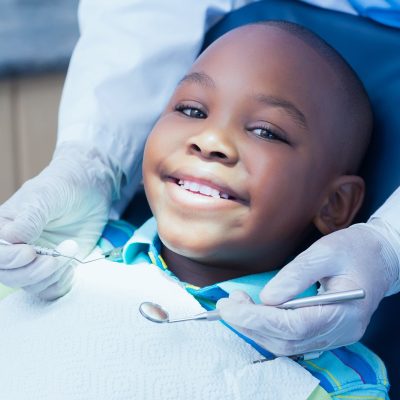
Many children are calm, comfortable and confident in a pediatric dental office. Because pediatric dentists specialize in treating children, they make children feel special. The office is especially designed for children. Our staff members choose to work in a pediatric dental office because they enjoy kids.
Sometimes, however, a child feels anxious during treatment. Your child may need more support than a gentle, caring manner to feel comfortable. If you are looking for painless dentistry for your child, Nitrous oxide/oxygen is a safe, effective technique to calm a child’s fear of the dental visit.
Our office offers several agents used in conscious sedation. During your new patient visit, we will explore sedation options based on your child’s age, level of anxiety, amount of dental work, and length of the appointment.
- Calming the Anxious Child
- Conscious Sedation
- Nitrous Oxide
Nitrous Oxide
Some children are given nitrous oxide/oxygen, or what you may know as laughing gas, to relax them for their dental treatment. Nitrous oxide/oxygen is a blend of two gases, oxygen and nitrous oxide. Nitrous oxide/oxygen is given through a small breathing mask which is placed over the child’s nose, allowing them to relax, but without putting them to sleep. The American Academy of Pediatric Dentistry, recognizes this technique as a very safe, effective technique to use for treating children’s dental needs. The gas is mild, easily taken, then with normal breathing, it is quickly eliminated from the body. It is non-addictive. While inhaling nitrous oxide/oxygen, your child remains fully conscious and keeps all natural reflexes.
Prior to your appointment:
- Please inform us of any change to your child’s health and/or medical condition.
- Tell us about any respiratory condition that makes breathing through the nose difficult for your child. It may limit the effectiveness of the nitrous oxide/oxygen.
- Let us know if your child is taking any medication on the day of the appointment.
Conscious Sedation
Conscious Sedation is recommended for apprehensive children, very young children, and children with special needs. It is used to calm your child and to reduce the anxiety or discomfort associated with dental treatments. Your child may be quite drowsy, and may even fall asleep, but they will not become unconscious.
There are a variety of different medications, which can be used for conscious sedation. The doctor will prescribe the medication best suited for your child’s overall health and dental treatment recommendations. We will be happy to answer any questions you might have concerning the specific drugs we plan to give to your child.
Prior to your appointment:
- Please notify us of any change in your child’s health and/or medical condition. Do not bring your child for treatment with a fever, ear infection or cold. Should your child become ill, contact us to see if it is necessary to postpone the appointment.
- You must tell the doctor of any drugs that your child is currently taking and any drug reactions and/or change in medical history.
- Please dress your child in loose fitting, comfortable clothing.
- Please make sure that your child goes to the bathroom immediately prior to arriving at the office.
- Your child should not have solid food for at least 6 hours prior to their sedation appointment and only clear liquids for up to 4 hours before the appointment.
- The child’s parent or legal guardian must remain at the office during the complete procedure.
- Please watch your child closely while the medication is taking effect. Hold them in your lap or keep close to you. Do not let them “run around.”
- Your child will act drowsy and may become slightly excited at first.
After the sedation appointment:
- Your child will be drowsy and will need to be monitored very closely. Keep your child away from areas of potential harm.
- If your child wants to sleep, place them on their side with their chin up. Wake your child every hour and encourage them to have something to drink in order to prevent dehydration. At first it is best to give your child sips of clear liquids to prevent nausea. The first meal should be light and easily digestible.
- If your child vomits, help them bend over and turn their head to the side to insure that they do not inhale the vomit.
- Because we use local anesthetic to numb your child’s mouth during the procedure, your child may have the tendency to bite or chew their lips, cheeks, and/or tongue and/or rub and scratch their face after treatment. Please observe your child carefully to prevent any injury to these areas.
- Please call our office for any questions or concerns that you might have.
I.V. Sedation
I.V. Sedation is recommended for apprehensive children, very young children, and children with special needs that would not work well under conscious sedation. The dentist performs the dental treatment in our office with the child anesthetized under I.V. sedation, which is administered and monitored by an anesthesiologist.
Prior to your appointment:
- Please notify us of any change in your child’s health and/or medical condition. Do not bring your child for treatment with a fever, ear infection or cold. Should your child become ill, contact us to see if it is necessary to postpone the appointment.
- You must tell the doctor of any drugs that your child is currently taking and any drug reactions and/or change in medical history.
- Please dress your child in loose fitting, comfortable clothing.
- Please make sure that your child goes to the bathroom immediately prior to arriving at the office.
- Your child should not have milk or solid food after midnight prior to the scheduled procedure and clear liquids ONLY (water, apple juice, Gatorade) for up to 6 hours prior to the appointment.
- The child’s parent or legal guardian must remain at the office during the complete procedure.
After the sedation appointment:
- Your child will be drowsy and will need to be monitored very closely. Keep your child away from areas of potential harm.
- If your child wants to sleep, place them on their side with their chin up. Wake your child every hour and encourage them to have something to drink in order to prevent dehydration. At first it is best to give your child sips of clear liquids to prevent nausea. The first meal should be light and easily digestible.
- If your child vomits, help them bend over and turn their head to the side to insure that they do not inhale the vomit.
- Please call our office for any questions or concerns that you might have.
In-Office General Anesthesia
In-Office General Anesthesia is a safe and highly effective option for children who may not be able to tolerate dental treatment with other forms of sedation due to anxiety, age, extensive dental needs, strong gag reflex, or developmental or behavioral challenges. Under general anesthesia, your child is placed into a controlled state of deep sleep, so they remain completely unaware of the treatment and feel no pain during the procedure.
Your child’s anesthesia is always provided by a board-certified MD anesthesiologist with advanced pediatric training — the same level of expertise you’d find at a children’s hospital. We tailor the anesthesia plan to your child’s individual needs, and we take every precaution to ensure the highest level of comfort and safety from start to finish.
What to expect with In-Office General Anesthesia:
- Comfort-Focused Care: Your child will be fully asleep and unaware of the dental treatment, making this an excellent option for long, complex procedures or for children who are extremely anxious or unable to cooperate in the dental chair.
- Thorough Evaluation: Prior to your appointment, we’ll review your child’s health history and anesthesia plan to ensure the safest approach.
- Expert Monitoring: Throughout the procedure, our team monitors your child’s heart rate, oxygen levels, breathing, and other vital signs to make sure they remain stable and safe.
- Recovery and Aftercare: After treatment, your child will wake up in our comfortable recovery area. We’ll provide detailed post-procedure instructions to help you care for your child as the anesthesia wears off.
General anesthesia can be especially beneficial when multiple treatments are needed in one visit, significantly reducing stress for both children and families. Our goal is to make dental care accessible, efficient, and as stress-free as possible for every child.
If you’re looking for a pediatric dentist for your child, look no further than Children’s Dental Zone. You can schedule your appointment right here on our website, or if you’d prefer to meet us and “scope out the place” before scheduling your appointment, feel free to drop by our Johns Creek pediatric dental practice at any time.
We would love the opportunity to give you a tour of our office and show you how we can take care of your child.
We look forward to meeting you and the rest of your precious family!